what to take for food poisoning in europe
Foodborne affliction (as well foodborne affliction and colloquially referred to as food poisoning)[one] is whatsoever disease resulting from the spoilage of contaminated food past pathogenic bacteria, viruses, or parasites that contaminate food,[2] equally well equally prions (the agents of mad cow disease), and toxins such as aflatoxins in peanuts, poisonous mushrooms, and diverse species of beans that have non been boiled for at to the lowest degree 10 minutes.
Symptoms vary depending on the cause but frequently include vomiting, fever, and aches, and may include diarrhea. Bouts of vomiting can be repeated with an extended filibuster in between, because even if infected nutrient was eliminated from the tum in the offset tour, microbes, like leaner (if applicative), can pass through the stomach into the intestine and begin to multiply. Some types of microbes stay in the intestine.
For contaminants requiring an incubation period, symptoms may not manifest for hours to days, depending on the cause and on quantity of consumption. Longer incubation periods tend to crusade sufferers to not associate the symptoms with the detail consumed, so they may misattribute the symptoms to gastroenteritis, for example.
Causes [edit]
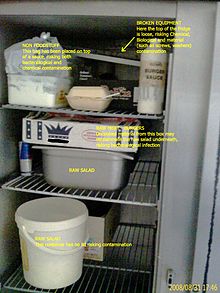
Poorly stored food in a refrigerator
Foodborne affliction usually arises from improper handling, preparation, or food storage. Good hygiene practices before, during, and after food preparation tin can reduce the chances of contracting an affliction. There is a consensus in the public health community that regular mitt-washing is 1 of the well-nigh constructive defenses confronting the spread of foodborne illness. The activity of monitoring food to ensure that it volition not cause foodborne disease is known every bit nutrient condom. Foodborne illness can also be caused past a large variety of toxins that affect the environment.[3]
Furthermore, foodborne illness can be caused by a number of chemicals, such as pesticides, medicines, and natural toxic substances such as vomitoxin, poisonous mushrooms or reef fish. [4]
Leaner [edit]
Bacteria are a common crusade of foodborne illness. The Great britain, in 2000, reported the individual leaner involved as the following: Campylobacter jejuni 77.3%, Salmonella 20.9%, Escherichia coli O157:H7 1.4%, and all others less than 0.56%.[5] In the past, bacterial infections were idea to be more prevalent because few places had the adequacy to test for norovirus and no active surveillance was being done for this particular agent. Toxins from bacterial infections are delayed considering the leaner need time to multiply. Equally a result, symptoms associated with intoxication are usually non seen until 12–72 hours or more than afterwards eating contaminated food. However, in some cases, such as Staphylococcal food poisoning, the onset of illness can exist as presently equally 30 minutes after ingesting contaminated food.[6]
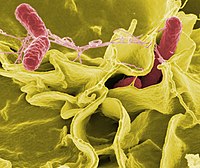
Most common bacterial foodborne pathogens are:
- Campylobacter jejuni which can lead to secondary Guillain–Barré syndrome and periodontitis[7]
- Clostridium perfringens, the "cafeteria germ"[viii] [nine]
- Salmonella spp. – its S. typhimurium infection is acquired by consumption of eggs or poultry that are not adequately cooked or by other interactive human-animate being pathogens[10] [11] [12]
- Escherichia coli O157:H7 enterohemorrhagic (EHEC) which can crusade hemolytic-uremic syndrome
Other common bacterial foodborne pathogens are: [13]
- Bacillus cereus
- Escherichia coli, other virulence properties, such as enteroinvasive (EIEC), enteropathogenic (EPEC), enterotoxigenic (ETEC), enteroaggregative (EAEC or EAgEC)
- Listeria monocytogenes
- Shigella spp.
- Staphylococcus aureus
- Staphylococcal enteritis
- Streptococcus
- Vibrio cholerae, including O1 and non-O1
- Vibrio parahaemolyticus
- Vibrio vulnificus
- Yersinia enterocolitica and Yersinia pseudotuberculosis
Less mutual bacterial agents:[ citation needed ]
- Brucella spp.
- Corynebacterium ulcerans
- Coxiella burnetii or Q fever
- Plesiomonas shigelloides
Enterotoxins [edit]
In addition to disease caused past direct bacterial infection, some foodborne illnesses are caused by enterotoxins (exotoxins targeting the intestines). Enterotoxins tin can produce illness even when the microbes that produced them have been killed. Symptom appearance varies with the toxin but may be rapid in onset, equally in the case of enterotoxins of Staphylococcus aureus in which symptoms appear in one to half dozen hours.[xiv] This causes intense airsickness including or non including diarrhea (resulting in staphylococcal enteritis), and staphylococcal enterotoxins (well-nigh usually staphylococcal enterotoxin A but also including staphylococcal enterotoxin B) are the most ordinarily reported enterotoxins although cases of poisoning are likely underestimated.[15] Information technology occurs mainly in cooked and candy foods due to competition with other biota in raw foods, and humans are the principal cause of contagion as a substantial pct of humans are persistent carriers of S. aureus.[15] The CDC has estimated about 240,000 cases per twelvemonth in the United States.[xvi]
- Clostridium botulinum
- Clostridium perfringens
- Bacillus cereus
The rare merely potentially deadly disease botulism occurs when the anaerobic bacterium Clostridium botulinum grows in improperly canned low-acid foods and produces botulin, a powerful paralytic toxin.
Pseudoalteromonas tetraodonis, sure species of Pseudomonas and Vibrio, and another leaner, produce the lethal tetrodotoxin, which is present in the tissues of some living creature species rather than being a product of decomposition.[ citation needed ]
Emerging foodborne pathogens [edit]
- Aeromonas hydrophila, Aeromonas caviae, Aeromonas sobria
Scandinavian outbreaks of Yersinia enterocolitica take recently increased to an almanac basis, connected to the non-canonical contagion of pre-washed salad. [17]
Preventing bacterial food poisoning [edit]
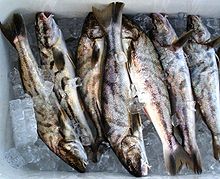
Prevention is mainly the role of the state, through the definition of strict rules of hygiene and a public services of veterinary surveying of beast products in the food chain, from farming to the transformation industry and commitment (shops and restaurants). This regulation includes:
- traceability: in a last product, it must exist possible to know the origin of the ingredients (originating subcontract, identification of the harvesting or of the animate being) and where and when information technology was processed; the origin of the illness tin can thus be tracked and solved (and possibly penalized), and the final products can be removed from the auction if a trouble is detected;
- enforcement of hygiene procedures such as HACCP and the "cold concatenation";
- ability of command and of police enforcement of veterinarians.
In August 2006, the United States Nutrient and Drug Assistants canonical Phage therapy which involves spraying meat with viruses that infect leaner, and thus preventing infection. This has raised concerns, because without mandatory labelling consumers would non be aware that meat and poultry products have been treated with the spray.[18]
At home, prevention mainly consists of skillful nutrient safety practices. Many forms of bacterial poisoning tin exist prevented past cooking nutrient sufficiently, and either eating it apace or refrigerating information technology effectively.[2] Many toxins, however, are not destroyed by heat treatment.
Techniques that help forestall nutrient borne illness in the kitchen are mitt washing, rinsing produce,[19] preventing cross-contamination, proper storage, and maintaining cooking temperatures. In general, freezing or refrigerating prevents nigh all bacteria from growing, and heating nutrient sufficiently kills parasites, viruses, and nigh bacteria. Leaner grow nearly rapidly at the range of temperatures betwixt xl and 140 °F (iv and 60 °C), chosen the "danger zone". Storing food below or in a higher place the "danger zone" tin can finer limit the production of toxins. For storing leftovers, the food must be put in shallow containers for quick cooling and must be refrigerated within two hours. When nutrient is reheated, information technology must reach an internal temperature of 165 °F (74 °C) or until hot or steaming to kill bacteria.[20]
Mycotoxins and alimentary mycotoxicoses [edit]
The term alimentary mycotoxicosis refers to the effect of poisoning by mycotoxins through food consumption. The term mycotoxin is unremarkably reserved for the toxic chemical products produced past fungi that readily colonize crops. Mycotoxins sometimes have important effects on human and brute health. For example, an outbreak which occurred in the Great britain in 1960 acquired the decease of 100,000 turkeys which had consumed aflatoxin-contaminated peanut meal. In the USSR in World State of war Two, 5,000 people died due to alimentary toxic aleukia (ALA).[21] The common foodborne Mycotoxins include:
- Aflatoxins – originating from Aspergillus parasiticus and Aspergillus flavus. They are frequently found in tree nuts, peanuts, maize, sorghum and other oilseeds, including corn and cottonseeds. The pronounced forms of Aflatoxins are those of B1, B2, G1, and G2, amidst which Aflatoxin B1 predominantly targets the liver, which will effect in necrosis, cirrhosis, and carcinoma.[22] [23] In the United states of america, the acceptable level of total aflatoxins in foods is less than 20 μg/kg, except for Aflatoxin M1 in milk, which should be less than 0.5 μg/kg.[24] The official document can be found at FDA's website.[25] [26]
- Altertoxins – are those of alternariol (AOH), alternariol methyl ether (AME), altenuene (ALT), altertoxin-i (ATX-1), tenuazonic acid (TeA), and radicinin (RAD), originating from Alternaria spp. Some of the toxins can exist present in sorghum, ragi, wheat and tomatoes.[27] [28] [29] Some enquiry has shown that the toxins tin exist easily cross-contaminated betwixt grain commodities, suggesting that manufacturing and storage of grain bolt is a critical do.[30]
- Citrinin
- Citreoviridin
- Cyclopiazonic acrid
- Cytochalasins
- Ergot alkaloids / ergopeptine alkaloids – ergotamine
- Fumonisins – Ingather corn can be easily contaminated past the fungi Fusarium moniliforme, and its fumonisin B1 will cause leukoencephalomalacia (LEM) in horses, pulmonary edema syndrome (PES) in pigs, liver cancer in rats and esophageal cancer in humans.[31] [32] For human and beast health, both the FDA and the EC have regulated the content levels of toxins in food and animal feed.[33] [34]
- Fusaric acid
- Fusarochromanone
- Kojic acid
- Lolitrem alkaloids
- Moniliformin
- iii-Nitropropionic acrid
- Nivalenol
- Ochratoxins – In Australia, The Limit of Reporting (LOR) level for ochratoxin A (OTA) analyses in 20th Australian Full Diet Survey was 1 µg/kg,[35] whereas the EC restricts the content of OTA to 5 µg/kg in cereal commodities, 3 µg/kg in processed products and 10 µg/kg in dried vine fruits.[36]
- Oosporeine
- Patulin – Currently, this toxin has been advisably regulated on fruit products. The EC and the FDA have limited information technology to nether 50 µg/kg for fruit juice and fruit nectar, while limits of 25 µg/kg for solid-contained fruit products and 10 µg/kg for baby foods were specified past the EC.[36] [37]
- Phomopsins
- Sporidesmin A
- Sterigmatocystin
- Tremorgenic mycotoxins – V of them accept been reported to be associated with molds found in fermented meats. These are fumitremorgen B, paxilline, penitrem A, verrucosidin, and verruculogen.[38]
- Trichothecenes – sourced from Cephalosporium, Fusarium, Myrothecium, Stachybotrys, and Trichoderma. The toxins are usually found in molded maize, wheat, corn, peanuts and rice, or brute feed of hay and straw.[39] [40] Four trichothecenes, T-2 toxin, HT-2 toxin, diacetoxyscirpenol (DAS), and deoxynivalenol (DON) accept been most commonly encountered by humans and animals. The consequences of oral intake of, or dermal exposure to, the toxins volition effect in alimentary toxic aleukia, neutropenia, aplastic anemia, thrombocytopenia and/or skin irritation.[41] [42] [43] In 1993, the FDA issued a certificate for the content limits of DON in food and beast feed at an advisory level.[44] In 2003, US published a patent that is very promising for farmers to produce a trichothecene-resistant crop.[45]
- Zearalenone
- Zearalenols
Viruses [edit]
Viral infections make up mayhap i third of cases of nutrient poisoning in developed countries. In the United states, more than than 50% of cases are viral and noroviruses are the most mutual foodborne illness, causing 57% of outbreaks in 2004. Foodborne viral infection are usually of intermediate (i–iii days) incubation period, causing illnesses which are self-limited in otherwise healthy individuals; they are similar to the bacterial forms described higher up.[ commendation needed ]
- Enterovirus
- Hepatitis A is distinguished from other viral causes by its prolonged (two–6 week) incubation period and its ability to spread beyond the stomach and intestines into the liver. It oftentimes results in jaundice, or yellowing of the peel, just rarely leads to chronic liver dysfunction. The virus has been found to cause infection due to the consumption of fresh-cut produce which has fecal contamination.[46] [47]
- Hepatitis E
- Norovirus
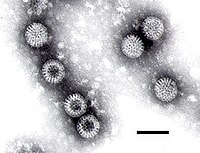
- Rotavirus
Parasites [edit]
Nearly foodborne parasites are zoonoses.[48]
- Platyhelminthes:[ commendation needed ]
- Diphyllobothrium sp.
- Nanophyetus sp.
- Taenia saginata
- Taenia solium
- Fasciola hepatica
- Encounter also: Tapeworm and Flatworm
- Nematode:[49]
- Anisakis sp.
- Ascaris lumbricoides
- Eustrongylides sp.
- Trichinella spiralis
- Trichuris trichiura
- Protozoa:[ citation needed ]
- Acanthamoeba and other free-living amoebae
- Cryptosporidiosis
- Cyclospora cayetanensis
- Entamoeba histolytica
- Giardia lamblia
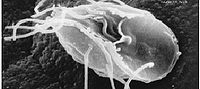
- Sarcocystis hominis
- Sarcocystis suihominis
- Toxoplasma
Natural toxins [edit]
Several foods tin can naturally contain toxins, many of which are not produced by leaner. Plants in particular may exist toxic; animals which are naturally poisonous to consume are rare. In evolutionary terms, animals can escape being eaten past fleeing; plants tin can use only passive defenses such every bit poisons and distasteful substances, for example capsaicin in chili peppers and pungent sulfur compounds in garlic and onions. Most animal poisons are not synthesised by the animal, but caused past eating poisonous plants to which the animal is immune, or by bacterial action.[ commendation needed ]
- Alkaloids
- Ciguatera poisoning
- Grayanotoxin (honey intoxication)
- Hormones from the thyroid glands of slaughtered animals (especially Triiodothyronine in cases of hamburger thyrotoxicosis or alimentary thyrotoxicosis)[l] [51] [52] [53] [54] [55]
- Mushroom toxins
- Phytohaemagglutinin (cherry-red kidney bean poisoning; destroyed past boiling)
- Pyrrolizidine alkaloids
- Shellfish toxin, including paralytic shellfish poisoning, diarrhetic shellfish poisoning, neurotoxic shellfish poisoning, amnesic shellfish poisoning and ciguatera fish poisoning
- Scombrotoxin
- Tetrodotoxin (fugu fish poisoning)
Some plants incorporate substances which are toxic in large doses, but have therapeutic properties in appropriate dosages.
- Foxglove contains cardiac glycosides.
- Poisonous hemlock (conium) has medicinal uses.[ citation needed ]
Other pathogenic agents [edit]
- Prions, resulting in Creutzfeldt–Jakob affliction (CJD) and its variant (vCJD)
"Ptomaine poisoning" [edit]
Ptomaine poisoning was a myth that persisted in the public consciousness, in newspaper headlines, and legal cases as an official diagnosis, decades afterwards information technology had been disproven scientifically in the 1910s.[56]
In the 19th century, the Italian chemist Francesco Selmi, of Bologna, introduced the generic name ptomaine (from Greek ptōma, "fall, fallen trunk, corpse") for alkaloids establish in decaying animal and vegetable matter, especially (as reflected in their names) putrescine and cadaverine.[57] The 1892 Merck's Bulletin stated, "We proper name such products of bacterial origin ptomaines; and the special alkaloid produced by the comma bacillus is variously named Cadaverine, Putrescine, etc."[58] While The Lancet stated, "The chemical ferments produced in the system, the... ptomaines which may exercise and so disastrous an influence."[59] It is now known that the "disastrous... influence" is due to the straight activeness of bacteria and simply slightly to the alkaloids. Thus, the use of the phrase "ptomaine poisoning" is now obsolete.
Tainted irish potato salad sickening hundreds at a Communist political convention in Massillon, Ohio,[threescore] and aboard a Washington DC cruise boat in separate incidents during a single week in 1932 drew national attention to the dangers of so-called "ptomaine poisoning" in the pages of the American news weekly, Time. [61] Another paper article from 1944 told of more than 150 persons being hospitalized in Chicago with ptomaine poisoning apparently from rice pudding served by a chain of restaurants.[62]
Mechanism [edit]
Incubation menstruum [edit]
The filibuster between the consumption of contaminated nutrient and the advent of the first symptoms of illness is called the incubation period. This ranges from hours to days (and rarely months or even years, such equally in the instance of listeriosis or bovine spongiform encephalopathy), depending on the amanuensis, and on how much was consumed. If symptoms occur within one to half-dozen hours afterwards eating the food, it suggests that it is caused by a bacterial toxin or a chemical rather than alive leaner.
The long incubation menstruum of many foodborne illnesses tends to crusade sufferers to attribute their symptoms to gastroenteritis.[63]
During the incubation period, microbes pass through the tum into the intestine, attach to the cells lining the intestinal walls, and begin to multiply there. Some types of microbes stay in the intestine, some produce a toxin that is absorbed into the bloodstream, and some can straight invade the deeper body tissues. The symptoms produced depend on the type of microbe.[64]
Infectious dose [edit]
The infectious dose is the amount of amanuensis that must be consumed to give rise to symptoms of foodborne illness, and varies according to the agent and the consumer's historic period and overall health. Pathogens vary in minimum infectious dose; for example, Shigella sonnei has a low estimated minimum dose of < 500 colony-forming units (CFU) while Staphylococcus aureus has a relatively high estimate.[65]
In the case of Salmonella a relatively big inoculum of ane million to 1 billion organisms is necessary to produce symptoms in good for you human being volunteers,[66] as Salmonellae are very sensitive to acid. An unusually high stomach pH level (depression acidity) greatly reduces the number of bacteria required to cause symptoms by a gene of between 10 and 100.
Epidemiology [edit]
Asymptomatic subclinical infection may help spread these diseases, specially Staphylococcus aureus, Campylobacter, Salmonella, Shigella, Enterobacter, Vibrio cholerae, and Yersinia.[65] For example, as of 1984 information technology was estimated that in the The states, 200,000 people were asymptomatic carriers of Salmonella.[65]
Infants [edit]
Globally, infants are a group that is especially vulnerable to foodborne disease. The World Health Organization has issued recommendations for the training, use and storage of prepared formulas. Breastfeeding remains the best preventive measure for protection from foodborne infections in infants.[67]
U.s.a. [edit]
In the U.s., using FoodNet data from 2000 to 2007, the CDC estimated there were 47.8 one thousand thousand foodborne illnesses per yr (sixteen,000 cases for 100,000 inhabitants)[68] with nine.four million of these caused by 31 known identified pathogens.[69]
- 127,839 were hospitalized (43 per 100,000 inhabitants per year).[70] [71] [72]
- 3,037 people died (1.0 per 100,000 inhabitants per year).[71] [72]
Uk [edit]
According to a 2012 report from the Food Standards Agency, in that location were effectually a 1000000 cases of foodborne illness per yr (1,580 cases for 100,000 inhabitants).[73]
- 20,000 were hospitalized (32 per 100,000 inhabitants);[73] [74]
- 500 people died (0.lxxx per 100,000 inhabitants).[73] [74]
French republic [edit]
This data pertains to reported medical cases of 23 specific pathogens in the 1990s, as opposed to full population estimates of all nutrient-borne illness for the United States.[ citation needed ]
In France, for 750,000 cases (1210 per 100,000 inhabitants):[ citation needed ]
- 70,000 people consulted in the emergency department of a hospital (113 per 100,000 inhabitants);
- 113,000 people were hospitalized (182 per 100,000 inhabitants);
- 460 people died (0.75 per 100,000 inhabitants).
Australia [edit]
A study by the Australian National University,[77] published in Nov 2014, found in 2010 that there were an estimated 4.one one thousand thousand cases of foodborne gastroenteritis acquired in Commonwealth of australia on average each yr, along with five,140 cases of non-gastrointestinal disease. The study was funded past the Australian Department of Health, Food Standards Australia New Zealand and the NSW Food Authority.[ citation needed ]
The main causes were Norovirus, pathogenic Escherichia coli, Campylobacter spp. and non-typhoidal Salmonella spp., although the causes of approximately lxxx% of illnesses were unknown. Approximately 25% (xc% CrI: 13%–42%) of the 15.nine million episodes of gastroenteritis that occur in Commonwealth of australia were estimated to be transmitted by contaminated food. This equates to an average of approximately i episode of foodborne gastroenteritis every five years per person. Data on the number of hospitalisations and deaths correspond the occurrence of serious foodborne illness. Including gastroenteritis, not-gastroenteritis and sequelae, there were an estimated almanac 31,920 (90% CrI: 29,500–35,500) hospitalisations due to foodborne affliction and 86 (ninety% CrI: 70–105) deaths due to foodborne disease circa 2010. This report concludes that these rates are similar to contempo estimates in the United states and Canada.[ citation needed ]
A chief aim of this study was to compare if foodborne illness incidence had increased over time. In this study, like methods of cess were applied to data from circa 2000, which showed that the rate of foodborne gastroenteritis had not changed significantly over time. Two key estimates were the total number of gastroenteritis episodes each year, and the proportion considered foodborne. In circa 2010, it was estimated that 25% of all episodes of gastroenteritis were foodborne. By applying this proportion of episodes due to food to the incidence of gastroenteritis circa 2000, there were an estimated iv.iii 1000000 (90% CrI: ii.ii–seven.iii 1000000) episodes of foodborne gastroenteritis circa 2000, although apparent intervals overlap with 2010. Taking into business relationship changes in population size, applying these equivalent methods suggests a 17% decrease in the rate of foodborne gastroenteritis between 2000 and 2010, with considerable overlap of the 90% credible intervals.[ citation needed ]
This report replaces a previous estimate of five.4 million cases of nutrient-borne illness in Australia every year, causing:[78]
- 18,000 hospitalizations
- 120 deaths (0.5 deaths per 100,000 inhabitants)
- 2.ane one thousand thousand lost days off work
- 1.two million medico consultations
- 300,000 prescriptions for antibiotics.
Most foodborne disease outbreaks in Commonwealth of australia accept been linked to raw or minimally cooked eggs or poultry.[79] The Australian Nutrient Safety Data Council estimates that 1 third of cases of food poisoning occur in the dwelling house[fourscore]
Comparison betwixt countries [edit]
| Country | Annual deaths per 100,000 inhabitants | Annual hospitalization per 100,000 inhabitants |
|---|---|---|
| The states | 1.0 | 43 |
| United kingdom of great britain and northern ireland | 0.8 | 32 |
| France | 0.75 | 182 |
| Commonwealth of australia | 0.5 | 82 |
Outbreaks [edit]
The vast majority of reported cases of foodborne illness occur as individual or sporadic cases. The origin of most sporadic cases is undetermined. In the United states, where people consume exterior the habitation often, 58% of cases originate from commercial food facilities (2004 FoodNet data). An outbreak is defined as occurring when 2 or more people feel like illness after consuming food from a common source.[ citation needed ]
Oftentimes, a combination of events contributes to an outbreak, for case, nutrient might be left at room temperature for many hours, allowing bacteria to multiply which is compounded past inadequate cooking which results in a failure to impale the dangerously elevated bacterial levels.[ citation needed ]
Outbreaks are usually identified when those affected know each other. Withal, more and more, outbreaks are identified by public health staff from unexpected increases in laboratory results for certain strains of bacteria. Outbreak detection and investigation in the The states is primarily handled by local health jurisdictions and is inconsistent from commune to district. Information technology is estimated that 1–2% of outbreaks are detected.[ citation needed ]
Society and civilisation [edit]
United kingdom [edit]
In postwar Aberdeen (1964) a large-scale (>400 cases) outbreak of typhoid occurred, caused by contaminated corned beefiness which had been imported from Argentine republic.[81] The corned beef was placed in cans and considering the cooling plant had failed, cold river water from the Plate estuary was used to cool the cans. One of the cans had a defect and the meat within was contaminated. This meat was then sliced using a meat slicer in a store in Aberdeen, and a lack of cleaning the machinery led to spreading the contamination to other meats cut in the slicer. These meats were then eaten by the people of Aberdeen who then became sick.[ commendation needed ]
Serious outbreaks of foodborne illness since the 1970s prompted key changes in United kingdom nutrient prophylactic law. These included the death of 19 patients in the Stanley Royd Infirmary outbreak[82] and the bovine spongiform encephalopathy (BSE, mad moo-cow disease) outbreak identified in the 1980s. The death of 21 people in the 1996 Wishaw outbreak of East. coli O157[83] [84] was a precursor to the establishment of the Food Standards Agency which, according to Tony Blair in the 1998 white paper A Force for Change Cm 3830, "would be powerful, open and dedicated to the interests of consumers".[85]
In May 2015, for the second twelvemonth running, England's Food Standards Agency devoted its annual Food Rubber Week to – "The Chicken Challenge". The focus was on the handling of raw chicken in the home and in catering facilities in a drive to reduce the worryingly loftier levels of food poisoning from the campylobacter bacterium. Anne Hardy argues that widespread public education of food hygiene can exist useful, peculiarly through media (Telly cookery programmes) and advert. She points to the examples set by Scandinavian societies.[86]
United states [edit]
In 2001, the Center for Science in the Public Interest petitioned the United States Section of Agriculture to require meat packers to remove spinal cords before processing cattle carcasses for human consumption, a measure designed to lessen the risk of infection by variant Creutzfeldt–Jakob disease. The petition was supported by the American Public Health Clan, the Consumer Federation of America, the Authorities Accountability Project, the National Consumers League, and Condom Tables Our Priority.[87]
None of the US Department of Health and Human Services targets[88] regarding incidence of foodborne infections were reached in 2007.[89]
A report issued in June 2018 by NBC's Minneapolis station using research by both the CDC and the Minnesota Department of Wellness concluded that foodborne illness is on the ascension in the U.South.[90]
Organizations [edit]
The World Wellness Organization Department of Food Safety and Zoonoses (FOS) provides scientific advice for organizations and the public on bug concerning the safety of nutrient. Its mission is to lower the burden of foodborne disease, thereby strengthening the health security and sustainable development of Member States. Foodborne and waterborne diarrhoeal diseases kill an estimated two.ii million people annually, most of whom are children. WHO works closely with the Nutrient and Agriculture Organization of the Un (FAO) to address nutrient safety issues along the entire food production chain—from production to consumption—using new methods of adventure assay. These methods provide efficient, science-based tools to improve food safety, thereby benefiting both public wellness and economic development.[ commendation needed ]
[edit]
The International Food Rubber Regime Network (INFOSAN) is a joint program of the WHO and FAO. INFOSAN has been connecting national authorities from effectually the globe since 2004, with the goal of preventing the international spread of contaminated food and foodborne disease and strengthening nutrient rubber systems globally. This is done past:[ citation needed ]
- Promoting the rapid commutation of information during food safety events;
- Sharing information on important nutrient safety problems of global interest;
- Promoting partnership and collaboration between countries; and
- Helping countries strengthen their capacity to manage food prophylactic risks.
Membership to INFOSAN is voluntary, but is restricted to representatives from national and regional government authorities and requires an official letter of the alphabet of designation. INFOSAN seeks to reflect the multidisciplinary nature of food condom and promote intersectoral collaboration by requesting the designation of Focal Points in each of the respective national authorities with a stake in nutrient condom, and a unmarried Emergency Contact Point in the national say-so with the responsibility for coordinating national food safety emergencies; countries choosing to exist members of INFOSAN are committed to sharing data betwixt their respective food safety authorities and other INFOSAN members. The operational definition of a nutrient rubber authorization includes those authorities involved in: food policy; take chances assessment; food control and management; food inspection services; foodborne disease surveillance and response; laboratory services for monitoring and surveillance of foods and foodborne diseases; and food rubber information, didactics and advice across the farm-to-table continuum.[ citation needed ]
Prioritisation of food-borne pathogens [edit]
The Nutrient and Agronomics Organization of the United Nations and The Earth Health Arrangement have published a global ranking of food-borne parasites using a multicriteria ranking tool concluding that Taenia solium was the most relevant, followed past Echinococcus granulosus, Echinococcus multilocularis, and Toxoplasma gondii.[91] The same method was used regionally to rank the most of import food-borne parasites in Europe ranking Echinococcus multilocularis of highest relevance, followed by Toxoplasma gondii and Trichinella spiralis.[92]
Regulatory steps [edit]
Food may be contaminated during all stages of food product and retailing. In gild to prevent viral contamination, regulatory authorities in Europe have enacted several measures:[ citation needed ]
- European Commission Regulation (EC) No 2073/2005 of November 15, 2005
- European Committee for Standardization (CEN): Standard method for the detection of norovirus and hepatitis A virus in nutrient products (shellfish, fruits and vegetables, surfaces and bottled water)
- CODEX Committee on Food Hygiene (CCFH): Guideline for the application of general principles of food hygiene for the control of viruses in food[93]
See as well [edit]
- American Public Health Association 5. Butz
- Nutrient allergy
- Food microbiology
- Food quality
- Nutrient safety
- Food spoilage
- Food testing strips
- Gastroenteritis
- List of foodborne disease outbreaks past country
- List of food contamination incidents
- Mycotoxicology
- Air-condition after opening
- STOP Foodborne Illness
- U.s. Disease Command and Prevention
- Zoonotic pathogens
References [edit]
 This article incorporates public domain material from websites or documents of the Centers for Disease Command and Prevention.
- ^ "food poisoning" at Dorland's Medical Dictionary
- ^ a b "Foodborne Illness - Frequently Asked Questions". US Centers for Disease Control and Prevention. Archived from the original on March iii, 2011. Retrieved July three, 2016.
- ^ For foodborne illness caused by chemicals, encounter Food contaminants.
- ^ U.S. Food and Drug (2021). "Chemicals, Metals & Pesticides in Food". Food and Drug Administration.
{{cite web}}: CS1 maint: uses authors parameter (link) - ^ "Reducing the risk from E. coli 0157 – controlling cantankerous-contamination". Food Standards Agency, Britain. February 2011. Archived from the original on April 16, 2014. Retrieved 14 August 2016.
{{cite spider web}}: CS1 maint: bot: original URL status unknown (link) - ^ "Staphylococcal Food Poisoning". U.S. Centers for Disease Control and Prevention. Retrieved July three, 2016.
- ^ Humphrey T, O'Brien S, Madsen Yard (July 2007). "Campylobacters as zoonotic pathogens: a food product perspective". International Periodical of Nutrient Microbiology. 117 (3): 237–57. doi:10.1016/j.ijfoodmicro.2007.01.006. PMID 17368847.
- ^ "Foodborne Illness: What Consumers Demand to Know". USDA.gov . Retrieved Baronial 14, 2016.
- ^ Kiu R, Caim S, Painset A, Pickard D, Swift C, Dougan G, et al. (October 2019). "Clostridium perfringens in England and Wales over a 7-year period indicates distribution of clonal toxigenic strains in multiple outbreaks and all-encompassing involvement of enterotoxin-encoding (CPE) plasmids". Microbial Genomics. v (10): e000297. doi:10.1099/mgen.0.000297. PMC6861862. PMID 31553300.
- ^ Tribe IG, Cowell D, Cameron P, Cameron Southward (2002). "An outbreak of Salmonella typhimurium phage type 135 infection linked to the consumption of raw vanquish eggs in an aged intendance facility". Catching Diseases Intelligence Quarterly Report. 26 (i): 38–9. PMID 11950200. Archived from the original on February 17, 2014.
- ^ "Salmonella Infection (salmonellosis) and Animals". Centers for Disease Command and Prevention. Archived from the original on July four, 2007. Retrieved August 12, 2007.
- ^ Doyle MP, Erickson MC (June 2006). "Reducing the carriage of foodborne pathogens in livestock and poultry". Poultry Science. 85 (6): 960–73. doi:x.1093/ps/85.6.960. PMID 16776463.
- ^ CDC (March xviii, 2020). "Foodborne Germs and Illnesses".
{{cite spider web}}: CS1 maint: uses authors parameter (link) - ^ Food poisoning: Causes. Mayo Clinic.
- ^ a b Argudín MÁ, Mendoza MC, Rodicio MR (July 2010). "Food poisoning and Staphylococcus aureus enterotoxins". Toxins. 2 (7): 1751–73. doi:x.3390/toxins2071751. PMC3153270. PMID 22069659.
- ^ Staphylococcus aureus: A Problem When Food Is Left Out Likewise Long. Ohio State University Extension HYG-5564-xi].
- ^ Karlsson, Philip A.; Tano, Eva; Jernberg, Cecilia; Hickman, Rachel A.; Guy, Lionel; Järhult, Josef D.; Wang, Helen (May xiii, 2021). "Molecular Label of Multidrug-Resistant Yersinia enterocolitica From Foodborne Outbreaks in Sweden". Frontiers in Microbiology. 12: 664665. doi:10.3389/fmicb.2021.664665. ISSN 1664-302X. PMC8155512. PMID 34054769.
- ^ "FDA Says Viruses Rubber for Treating Meat". Archived from the original on Baronial 25, 2006. Retrieved September 2, 2014.
- ^ DeRusha J (November 9, 2010). "Good Question: Does Washing Fruit Do Anything?". Retrieved September xviii, 2016.
- ^ How Temperatures Affect Food. U.D. Department of Agriculture
- ^ Mount Chiliad. "Fungi and Mycotoxins" (PDF). vetmed.ucdavis.edu. Archived from the original (PDF) on September 27, 2007. Retrieved Baronial 11, 2007.
- ^ "Aflatoxins". Center for Nutrient Safety & Practical Nutrition . Retrieved August 12, 2007.
- ^ "GASGA Technical Leaflet – iii Mycotoxins in Grain". Nutrient and Agronomics Organization of the United Nations. Archived from the original on January 12, 2017. Retrieved Baronial 12, 2007.
- ^ "Chapter 2 Foodborne Hazards in Bones Food Safety for Health Workers" (PDF). Earth Wellness Arrangement. Archived from the original (PDF) on September 27, 2007. Retrieved August 12, 2007.
- ^ "Sec. 683.100 Activity Levels for Aflatoxins in Animal Feeds (CPG 7126.33)". Nutrient and Drug Administration . Retrieved August 13, 2007.
- ^ Henry MH. "Mycotoxins in Feeds: CVM's Perspective". FDA.gov . Retrieved January one, 2012.
- ^ Webley DJ, Jackson KL, Mullins JD, Hocking Advertizement, Pitt JI (1997). "Alternaria toxins in weather condition-damaged wheat and sorghum in the 1995–1996 Australian harvest". Australian Journal of Agricultural Research. 48 (8): 1249–56. doi:10.1071/A97005.
- ^ Li F, Yoshizawa T (July 2000). "Alternaria mycotoxins in weathered wheat from China". Journal of Agronomical and Food Chemistry. 48 (7): 2920–4. doi:ten.1021/jf0000171. PMID 10898645.
- ^ Motta SD, Valente Soares LM (July 2001). "Survey of Brazilian tomato products for alternariol, alternariol monomethyl ether, tenuazonic acid and cyclopiazonic acrid". Food Additives and Contaminants. xviii (7): 630–four. doi:10.1080/02652030117707. PMID 11469319. S2CID 45938351.
- ^ Li FQ, Toyazaki N, Yoshizawa T (April 2001). "Product of alternaria mycotoxins past Alternaria alternata isolated from weather-damaged wheat". Periodical of Food Protection. 64 (4): 567–71. doi:10.4315/0362-028X-64.4.567. PMID 11307900.
- ^ Marasas WF (1995). "Fumonisins: their implications for human and creature wellness". Natural Toxins. 3 (iv): 193–8, word 221. doi:ten.1002/nt.2620030405. PMID 7582616.
- ^ Soriano JM (2004). "Occurrence of fumonisins in foods". Food Research International. 37 (10): 985–thou. doi:10.1016/j.foodres.2004.06.009.
- ^ "CVM and Fumonisins". Food and Drug Administration. Archived from the original on August 12, 2007. Retrieved August 13, 2007.
- ^ "More contaminated maize repast products withdrawn from sale". Food Standards Agency. Archived from the original on Baronial thirteen, 2007. Retrieved August 12, 2007.
- ^ "20th Australian Total Nutrition Survey – Role B". Food Standards Australia New Zealand. Archived from the original on September 2, 2007. Retrieved August 13, 2007.
- ^ a b "Worldwide regulations for mycotoxins in food and feed in 2003". FAO Nutrient AND Nutrition Newspaper 81 . Retrieved August 13, 2007.
- ^ "Patulin in Apple Juice, Apple Juice Concentrates and Apple Juice Products". Food and Drug Assistants. Archived from the original on September 12, 2007. Retrieved August 16, 2007.
- ^ Sabater-Vilar M, Nijmeijer S, Fink-Gremmels J (November 2003). "Genotoxicity assessment of five tremorgenic mycotoxins (fumitremorgen B, paxilline, penitrem A, verruculogen, and verrucosidin) produced by molds isolated from fermented meats". Periodical of Food Protection. 66 (xi): 2123–nine. doi:ten.4315/0362-028X-66.11.2123. PMID 14627292.
- ^ Adejumo TO, Hettwer U, Karlovsky P (May 2007). "Occurrence of Fusarium species and trichothecenes in Nigerian maize". International Journal of Nutrient Microbiology. 116 (three): 350–7. doi:10.1016/j.ijfoodmicro.2007.02.009. PMID 17412440.
- ^ Mazur LJ, Kim J (December 2006). "Spectrum of noninfectious wellness furnishings from molds". Pediatrics. 118 (6): e1909-26. doi:10.1542/peds.2006-2829. PMID 17142508.
- ^ Froquet R, Sibiril Y, Parent-Massin D (Feb 2001). "Trichothecene toxicity on human being megakaryocyte progenitors (CFU-MK)". Human & Experimental Toxicology. 20 (two): 84–nine. doi:x.1191/096032701677428611. PMID 11327514. S2CID 37767457.
- ^ Joffe AZ, Yagen B (February 1977). "Comparative study of the yield of T-two toxic produced by Fusarium poae, F. sporotrichioides and F. sporotrichioides var. tricinctum strains from different sources". Mycopathologia. sixty (two): 93–7. doi:x.1007/bf00490378. PMID 846559. S2CID 39431820.
- ^ Hay RJ (Apr 2007). "Fusarium infections of the pare". Current Opinion in Infectious Diseases. 20 (ii): 115–7. doi:10.1097/QCO.0b013e328014392d. PMID 17496567.
- ^ "Guidance for Manufacture and FDA – Alphabetic character to State Agronomical Directors, State Feed Control Officials, and Nutrient, Feed, and Grain Trade Organizations". Food and Drug Assistants. Archived from the original on June nine, 2007. Retrieved Baronial xiii, 2007.
- ^ Hohn, Thomas Thou. "Trichothecene-resistant transgenic plants". U.S. Patent 6,646,184. Priority date March 31, 1999.
- ^ Dubois Eastward, Hennechart C, Deboosère N, Merle G, Legeay O, Burger C, et al. (April 2006). "Intra-laboratory validation of a concentration method adjusted for the enumeration of infectious F-specific RNA coliphage, enterovirus, and hepatitis A virus from inoculated leaves of salad vegetables". International Periodical of Food Microbiology. 108 (2): 164–71. doi:ten.1016/j.ijfoodmicro.2005.11.007. PMID 16387377.
- ^ Schmidt HM. "Improving the microbilological quality and safety of fresh-cut tomatoes by low dose dlectron beam irradiation – Main thesis" (PDF). Archived from the original (PDF) on September 27, 2007. Retrieved August eleven, 2007.
- ^ K D Murrell (August 2013). "Zoonotic foodborne parasites and their surveillance". Revue Scientifique et Technique (International Office of Epizootics). 32 (2): 559–569. PMID 24547659.
- ^ Britannica (2021). "Nematode".
- ^ Wartique L, Pothen 50, Pirson Due north, Hermans MP, Lambert K, Yildiz H (December 2017). "An unusual cause of epidemic thyrotoxicosis". Acta Clinica Belgica. 72 (6): 451–453. doi:10.1080/17843286.2017.1309336. PMID 28361645. S2CID 24489342.
- ^ Hedberg CW, Fishbein DB, Janssen RS, Meyers B, McMillen JM, MacDonald KL, et al. (Apr 1987). "An outbreak of thyrotoxicosis caused by the consumption of bovine thyroid gland in ground beefiness". The New England Journal of Medicine. 316 (sixteen): 993–8. doi:10.1056/NEJM198704163161605. PMID 3561455.
- ^ Parmar MS, Sturge C (September 2003). "Recurrent hamburger thyrotoxicosis". Canadian Medical Clan Journal. 169 (5): 415–vii. PMC183292. PMID 12952802.
- ^ Broome MR, Peterson ME, Kemppainen RJ, Parker VJ, Richter KP (January 2015). "Exogenous thyrotoxicosis in dogs attributable to consumption of all-meat commercial domestic dog food or treats containing excessive thyroid hormone: xiv cases (2008-2013)". Journal of the American Veterinary Medical Association. 246 (1): 105–xi. doi:10.2460/javma.246.i.105. PMID 25517332.
- ^ Hendriks LE, Looij BJ (March 2010). "Hyperthyroidism caused past excessive consumption of sausages". The Netherlands Journal of Medicine. 68 (three): 135–7. PMID 20308711.
- ^ Kinney JS, Hurwitz ES, Fishbein DB, Woolf PD, Pinsky PF, Lawrence DN, et al. (January 1988). "Community outbreak of thyrotoxicosis: epidemiology, immunogenetic characteristics, and long-term outcome". The American Journal of Medicine. 84 (i): 10–8. doi:x.1016/0002-9343(88)90002-2. PMID 3257352.
- ^ Brend, W. A. (May 25, 1934). "THE PTOMAINE-POISONING MYTH". The Spectator.
- ^ Oxford English Dictionary (First ed.). London: Oxford Academy Press. 1933. p. 1557.
- ^ Merck's Bulletin, Volume 5, William Henry Porter, 1892.
- ^ Lancet, iii October 1891, page 752
- ^ "Report Next Calendar week," Evening Independent (Massillon, OH), July 22, 1932, pg. 6
- ^ "Medicine: Potato Salad," Time, August i, 1932.
- ^ "Poisoning Hits 150 in Chicago". Kenosha Evening News. May 27, 1944.
- ^ Rachel M Lee, Justin Lessler,Rose A Lee, Kara E Rudolph, Nicholas Yard Reich,Trish G Perl, and Derek AT Cummings (September 2013). "Incubation periods of viral gastroenteritis: a systematic review". BMC Infectious Diseases. 13: 446. doi:10.1186/1471-2334-13-446. PMC3849296. PMID 24066865.
{{cite journal}}: CS1 maint: uses authors parameter (link) - ^ "Food-Related Diseases". U.s. Centers for Disease Command and Prevention. March 29, 2018.
- ^ a b c Greig JD. "Infective Doses and Pathogen Railroad vehicle". ResearchGate.
- ^ Owens, Michael D (January 2014) Salmonella Infection in Emergency Medicine. emedicine.com
- ^ FAO/WHO (2006). Earth Health Organization (ed.). "Enterobacter sakazakii and Salmonella in powdered infant formula" (Meeting report). Microbiological risk assessment series 10. Archived from the original on April 2, 2015.
- ^ Scallan East, Griffin PM, Angulo FJ, Tauxe RV, Hoekstra RM (January 2011). "Foodborne illness acquired in the United States--unspecified agents". Emerging Infectious Diseases. 17 (1): 16–22. doi:10.3201/eid1701.P21101. PMC3204615. PMID 21192849.
- ^ a b c Scallan E, Hoekstra RM, Angulo FJ, Tauxe RV, Widdowson MA, Roy SL, et al. (January 2011). "Foodborne illness acquired in the United States--major pathogens". Emerging Infectious Diseases. 17 (1): 7–15. doi:10.3201/eid1701.P11101. PMC3375761. PMID 21192848.
- ^ "Obama Proposes Single Overseer for Food Safety". The New York Times. February 20, 2015. Retrieved February 22, 2015.
According to the C.D.C., an estimated 87 1000000 Americans are sickened each twelvemonth by contaminated food, 371,000 are hospitalized with food-related illness and 5,700 die from food-related disease
- ^ a b Sabrina Tavernise (July 26, 2013). "F.D.A. Says Importers Must Audit Nutrient Safety". The New York Times . Retrieved July 27, 2013.
One in every half-dozen Americans becomes ill from eating contaminated food each twelvemonth, Dr. Margaret A. Hamburg, F.D.A. commissioner, estimated. About 130,000 are hospitalized and 3,000 die.
- ^ a b Stephanie Strom (January 4, 2013). "F.D.A. Offers Sweeping Rules to Fight Food Contamination". The New York Times . Retrieved January 5, 2013.
One in vi Americans becomes ill from eating contaminated food each year, the government estimates; of those, roughly 130,000 are hospitalized and 3,000 die.
- ^ a b c "Annual Study of the Chief Scientist 2012/13" (PDF). Food Standards Bureau. England. 2013.
- ^ a b Liebling A, Maruna S, McAra L (2017). The Oxford Handbook of Criminology. Oxford University Press. p. 290. ISBN978-0-nineteen-871944-1.
- ^ "Written report of the French germ-free agencies" (PDF) (in French). INVS/Afssa. Archived from the original (PDF) on March 3, 2016. Retrieved Oct vi, 2004.
- ^ "Summary of Report of the French germ-free agencies" (PDF) (in French). INVS/Afssa. Archived from the original (PDF) on March three, 2016. Retrieved October half dozen, 2004.
- ^ Kirk One thousand, et al. "Foodborne illness in Australia: Annual incidence circa 2010 pp7-9". Australia Department of Health. Australian National Academy. Retrieved September 13, 2015.
- ^ "Food borne illness in Commonwealth of australia" (PDF). OzFoodNet.
- ^ Astridge M, McPherson 1000, Kirk M, et al. (2011). "Foodborne illness outbreaks in Commonwealth of australia 2001-2009". Nutrient Australia. 63 (12): 44–50.
- ^ "Food Hygiene". BUPA. Archived from the original on Dec xi, 2015. Retrieved September 13, 2015.
- ^ Smith, David F.; Diack, H. Lesley and Pennington, T. Hugh (2005) Food Poisoning, Policy and Politics : Corned Beef and Typhoid in Britain in the 1960s. Boydell Press. ISBN ane-84383-138-4[ folio needed ]
- ^ Brian Deer (February 24, 1985). "Food toxicant deaths probe may reveal NHS flaws". The Sunday Times.
- ^ "BBC News - Health - Sheriff criticises E. coli butcher".
- ^ Cowden JM, Ahmed S, Donaghy M, Riley A (June 2001). "Epidemiological investigation of the central Scotland outbreak of Escherichia coli O157 infection, November to December 1996". Epidemiology and Infection. 126 (3): 335–41. doi:x.1017/S0950268801005520. PMC2869700. PMID 11467789.
- ^ "The Food Standards Agency: A Force for Change". gov.uk. Food Standards Agency, United Kingdom. January 14, 1998. Retrieved August 14, 2016.
- ^ Hardy A (January 13, 2016). "Nutrient Poisoning: An On-going Saga". History and Policy. History and Policy. Retrieved July 4, 2016.
- ^ "Meat Produced past Advanced Meat/Bone Separation Mechanism and Meat Recovery (AMR) Systems". Federal Register. U.Southward. National Archive and Records Assistants. January 12, 2004. Retrieved July 3, 2016.
- ^ "Healthy People 2010 Home Folio".
- ^ Centers for Illness Control Prevention (CDC) (April 2008). "Preliminary FoodNet data on the incidence of infection with pathogens transmitted commonly through food--10 states, 2007". MMWR. Morbidity and Bloodshed Weekly Report. 57 (14): 366–seventy. PMID 18401330.
- ^ Severson G (June 15, 2018). "Why are we seeing so many food recalls?". KARE 11. Retrieved June 19, 2018.
- ^ Multicriteria-based ranking for risk management of nutrient-borne parasites. Microbiological Risk Assessment Series No. 23. FAO/WHO. 2014. ISBN978-92-5-108199-0.
- ^ Bouwknegt M, Devleesschauwer B, Graham H, Robertson LJ, van der Giessen JW (March 2018). "Prioritisation of food-borne parasites in Europe, 2016". Euro Surveillance. 23 (ix). doi:10.2807/1560-7917.ES.2018.23.9.17-00161. PMC5840924. PMID 29510783.
- ^ "Codex Committee on Nutrient Hygiene (CCFH)", European Committee, Retrieved April 7, 2015
Further reading [edit]
Periodicals [edit]
- International Journal of Nutrient Microbiology, ISSN 0168-1605, Elsevier
- Foodborne Pathogens and Illness, ISSN 1535-3141, Mary Ann Liebert, Inc.
- Mycopathologia, ISSN 1573-0832 (electronic), ISSN 0301-486X (newspaper), Springer
Books [edit]
- Hocking Advertizement, Pitt JI, Samson RA, Thrane U (2005). Advances in Food Mycology. Springer. ISBN978-0-387-28385-2. ISBN 978-0-387-28391-3 (electronic).
- Hobbs BC (1993). Food Poisoning and Nutrient Hygiene. British Medical Bulletin. Vol. 7. Edward Arnold. pp. 167–70. doi:10.1093/oxfordjournals.bmb.a073825. ISBN978-0-340-53740-4. PMID 14821218.
- Riemann HP, Cliver Exercise (2006). FoodBorne Infections and Intoxications. Academic Press. ISBN978-0-12-588365-8.
- Smith JL (2005). Fratamico PM, Bhunia AK, Smith JL (eds.). Foodborne Pathogens: Microbiology And Molecular Biology. Horizon Scientific Press. ISBN978-1-904455-00-iv.
External links [edit]
- Foodborne diseases, emerging, WHO, Fact sheet Due north°124, revised Jan 2002
- Foodborne illness information pages, NSW Food Authority
- Food safe and foodborne illness, WHO, Fact sheet N°237, revised January 2002
- Great britain Wellness protection Bureau
- US PulseNet
- Food poisoning from NHS Directly Online
- Food Rubber Network hosted at the University of Guelph, Canada.
- Food Standard Agency website
Source: https://en.wikipedia.org/wiki/Foodborne_illness
0 Response to "what to take for food poisoning in europe"
Post a Comment